
Unveiling a Taonga: Three Decades of Ata Rangi Célèbre
John Penney is a wine experience guide based in Martinborough-Wellington, New Zealand. His lifelong passion for wine is shaped by extensive international wine travel, formal study (WSET Level 3), and a career in adult learning. He writes about wine from both technical and cultural perspectives, drawing on real-world tasting, wine travel, and extensive research. Through his own wine focused business, Wineinsights, he provides Wine tours around the Wairarapa, wine tasting in Martinborough, and wine education experiences for wine lovers and enthusiasts.
Ata Rangi Founder, Clive Paton, and Winemaker Helen Masters and others, recently joined John for an engaging, thought-provoking and special tasting of our Ata Rangi Célèbre, that transcends vintages from the ‘90’s to today. What follows is small excerpts from John’s story. It is a privilege to share his musings here and we urge you to read the full article to see John’s personal tasting notes from this dedicated Célèbre connoisseur.
“A Tribute to Wine Pioneer Clive Paton”
By John Penney
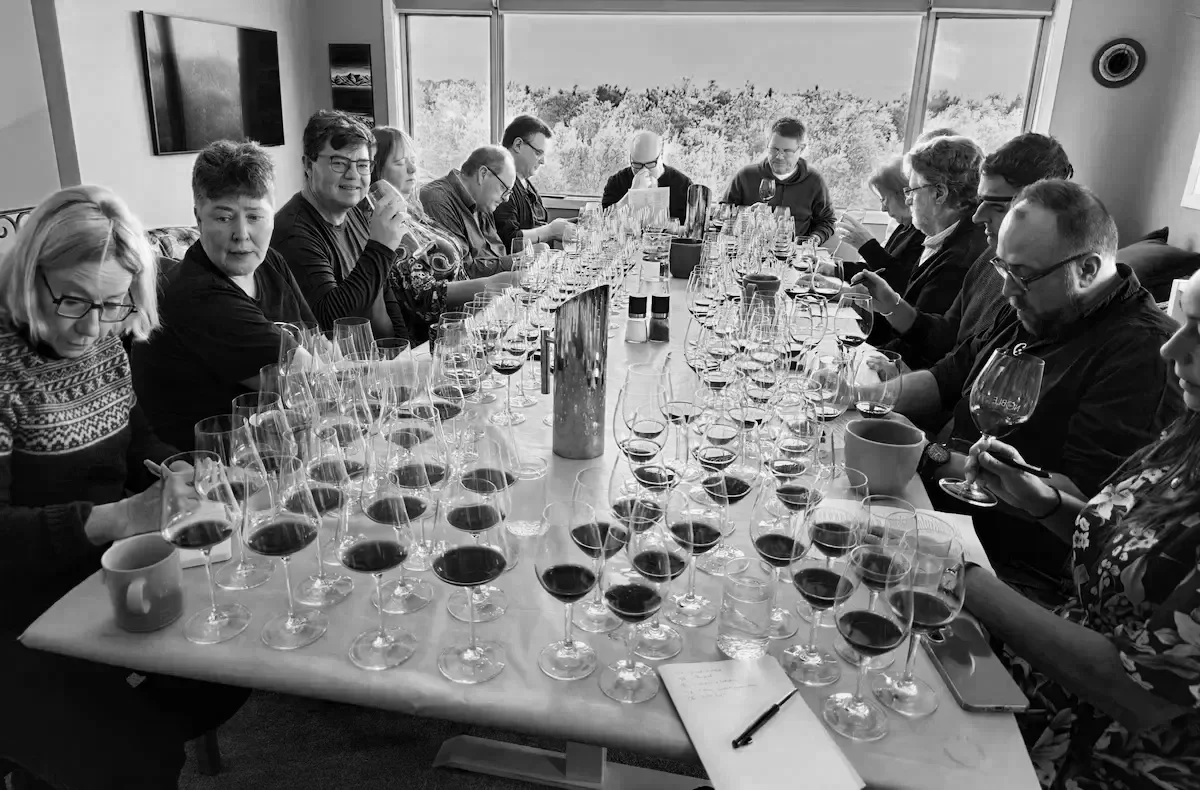
On Sunday 16 August 2026, (just yesterday when I first began writing), I had the privilege of leading a landmark vertical tasting of Ata Rangi Célèbre, featuring an extraordinary lineup of 13 wines spanning from 1994 to 2024. This rare retrospective offered a profound look at one of New Zealand’s most distinctive red blends—a wine that has quietly cultivated a fiercely dedicated following.
Historically, Célèbre has lived somewhat in the shadow of its legendary sibling, the internationally acclaimed Ata Rangi Pinot Noir, which remains a benchmark for the Martinborough region (see my article Three Decades of Ata Rangi Pinot Noir). Yet, as this tasting triumphantly demonstrated, Célèbre is a powerhouse of complexity and character in its own right, uniquely reflecting both the evolution of the estate and the brilliant longevity of Wairarapa’s late-ripening varieties.
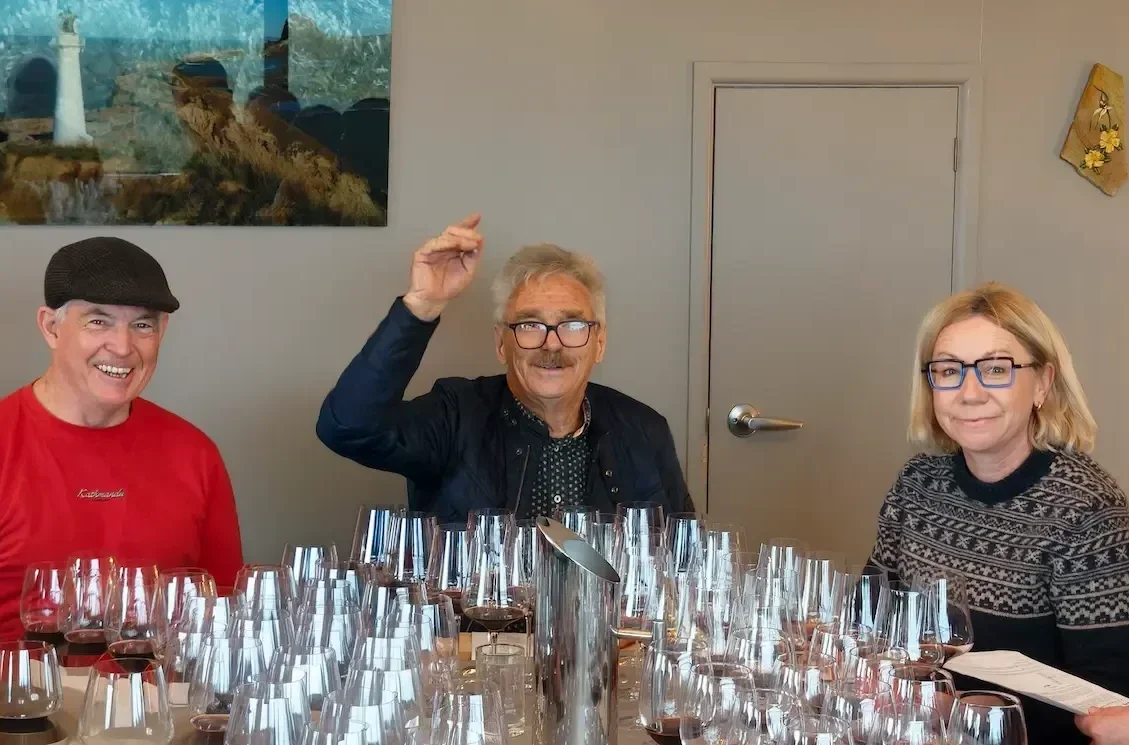
John Penney, Clive Paton & Helen Masters
My personal journey with this wine goes back to its very inception. The inaugural 1986 vintage was an unconventional blend of Merlot, accented with smaller portions of Syrah, Malbec, and a rare French-American hybrid locally dubbed 'Super Siebel'. I was fortunate enough to taste that maiden vintage in 1988—though it happened entirely by accident rather than design. In Te Reo Māori, Ata Rangi translates as “new dawn” and that roadside stall experience was a personal new dawn for me, awakening anticipation and appreciation for the profound viticultural treasures Martinborough would begin to reveal in the coming years.
At the time, I was living in Auckland, navigating my final year in New Zealand before making the move "across the ditch" to resettle in Sydney. During a brief visit to my parents in Masterton, with a free afternoon I took a spontaneous drive down the region's rural back roads. My route brought me into Martinborough, across Ponatahi Bridge and directly into Princess Street. Throughout the 1970s, having lived first in Masterton and then in Wellington, I had always thought of Martinborough as little more than a sleepy, uninteresting country outpost. I was completely oblivious to the viticultural revolution taking root in its stony soils since 1980.
It was thus with genuine surprise that I came to the vineyard established by pioneer Stan Chifney on the corner of Princess Street and Huangarua Road. Intrigued, I turned left, pulled into Chifney Wines, and shared a glass of Chenin Blanc with Stan himself. Continuing further down where Huangarua Road veers slightly at the Cambridge Road intersection to become Puruatanga Road, I noticed a rustic, roadside cellar door stall on the right-hand side. This was the humble birthplace of Ata Rangi, where I first met founder Clive Paton. Standing at that simple stall, he poured me a taste of that first 1986 Célèbre.
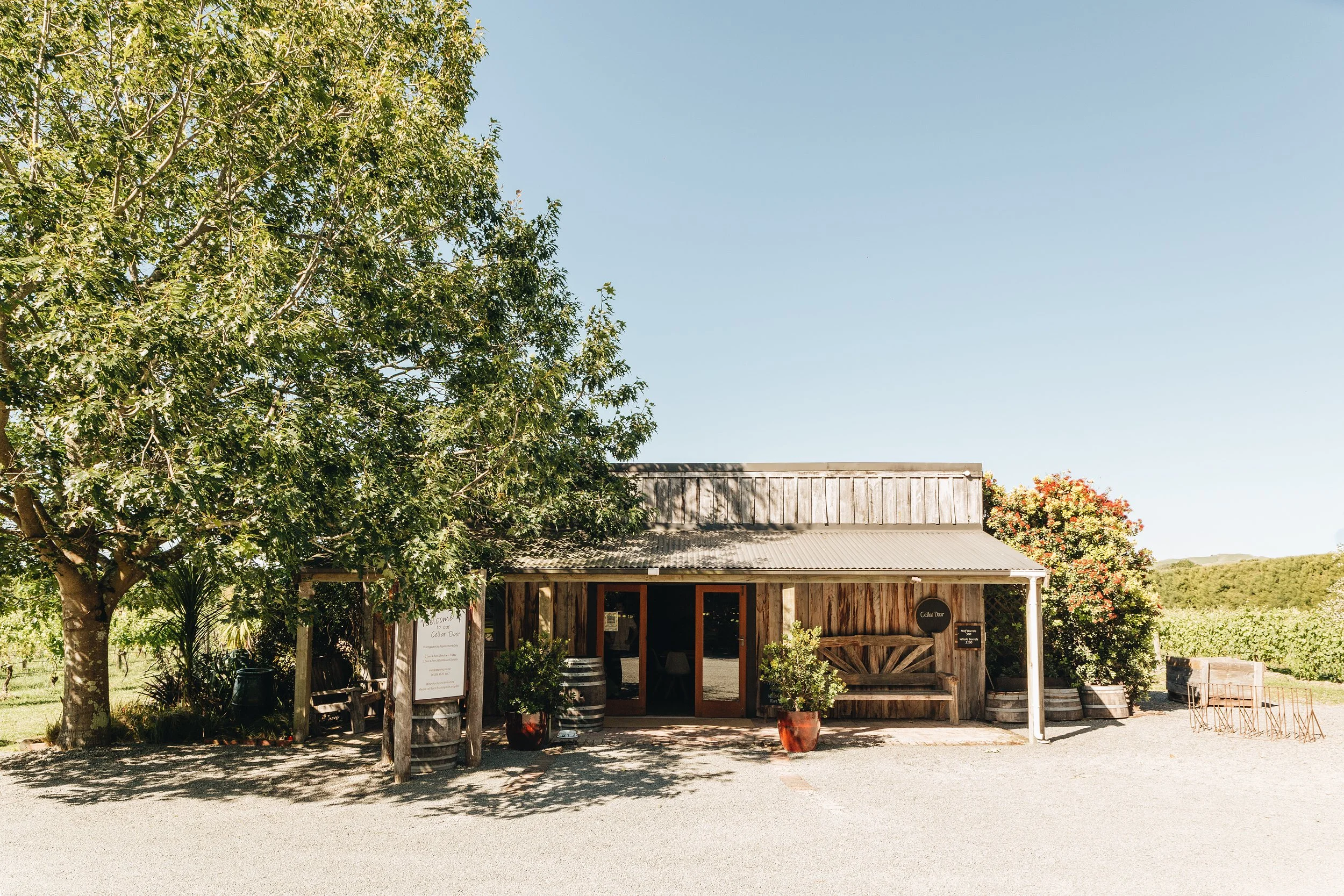
Ata Rangi Cellar Door
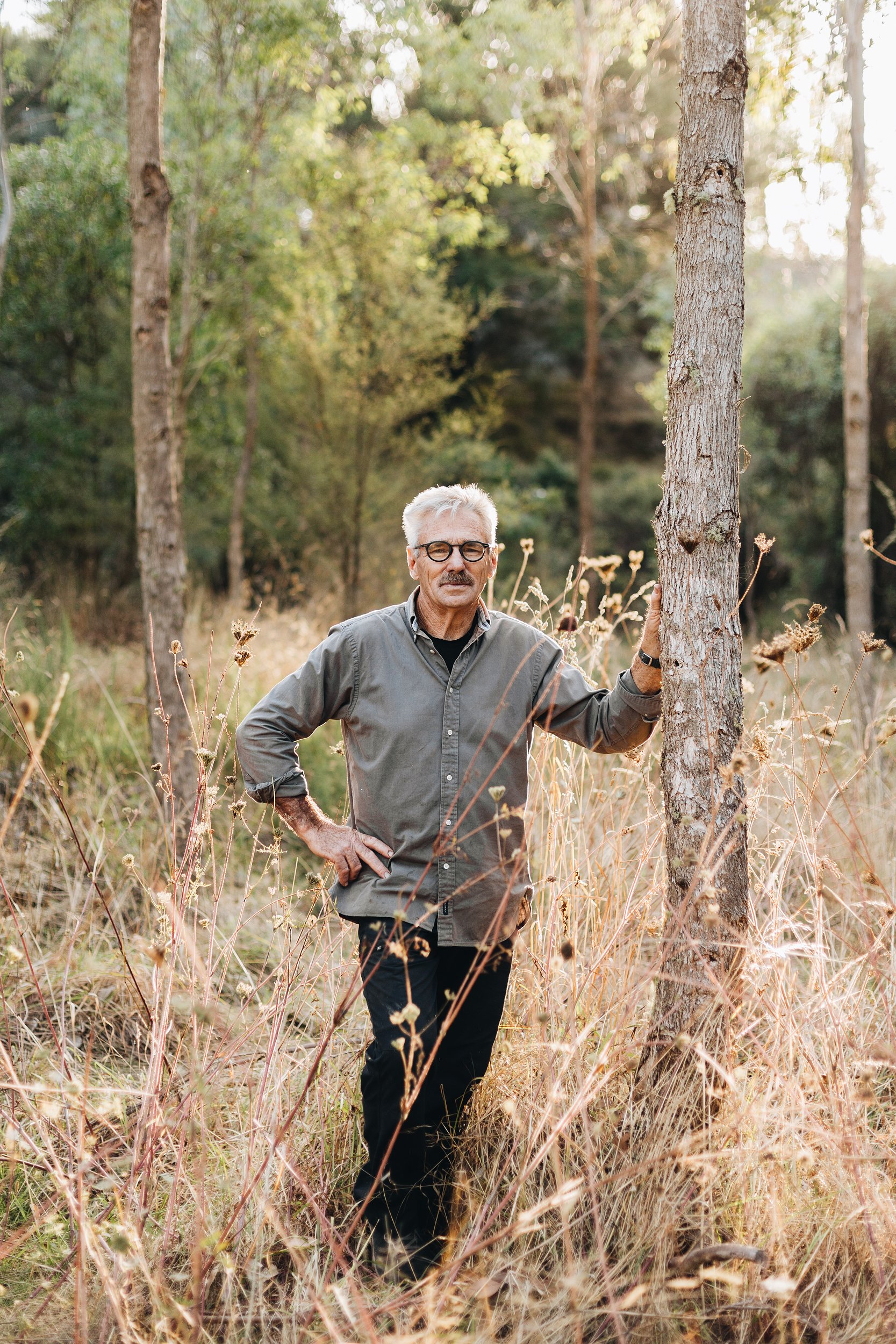
Clive Paton
The wine was so captivating that I bought a case on the spot. Gifted with that case was an Ata Rangi branded Ah-So, which has rescued me from many difficult corks in subsequent years. A week later, I took a bottle of that Célèbre to a dinner in Remuera with an American financial markets expert. He was so impressed by its depth, structure and savoury fruit that he immediately tasked me with securing a case for him as well.
Preparing the background research for this 30-year retrospective unearthed some fascinating insights that challenge common assumptions about this distinctive Bordeaux-meets-Rhône blend. Early wine commentators frequently failed to note the minor proportions of Cabernet Franc included in the blend, simply listing the entire Cabernets component as Cabernet Sauvignon. In truth, Cabernet Franc was almost always a minor partner in the wine. Furthermore, the records show that the Merlot component usually included some Malbec. Most intriguing of all is the historical persistence of the Siebel grape. Planted in the estate's infancy, a tiny proportion of this heritage hybrid has continuously survived alongside the Syrah, remaining a secret, unbroken thread woven into the fabric of Célèbre right through to the modern 2024 vintage.
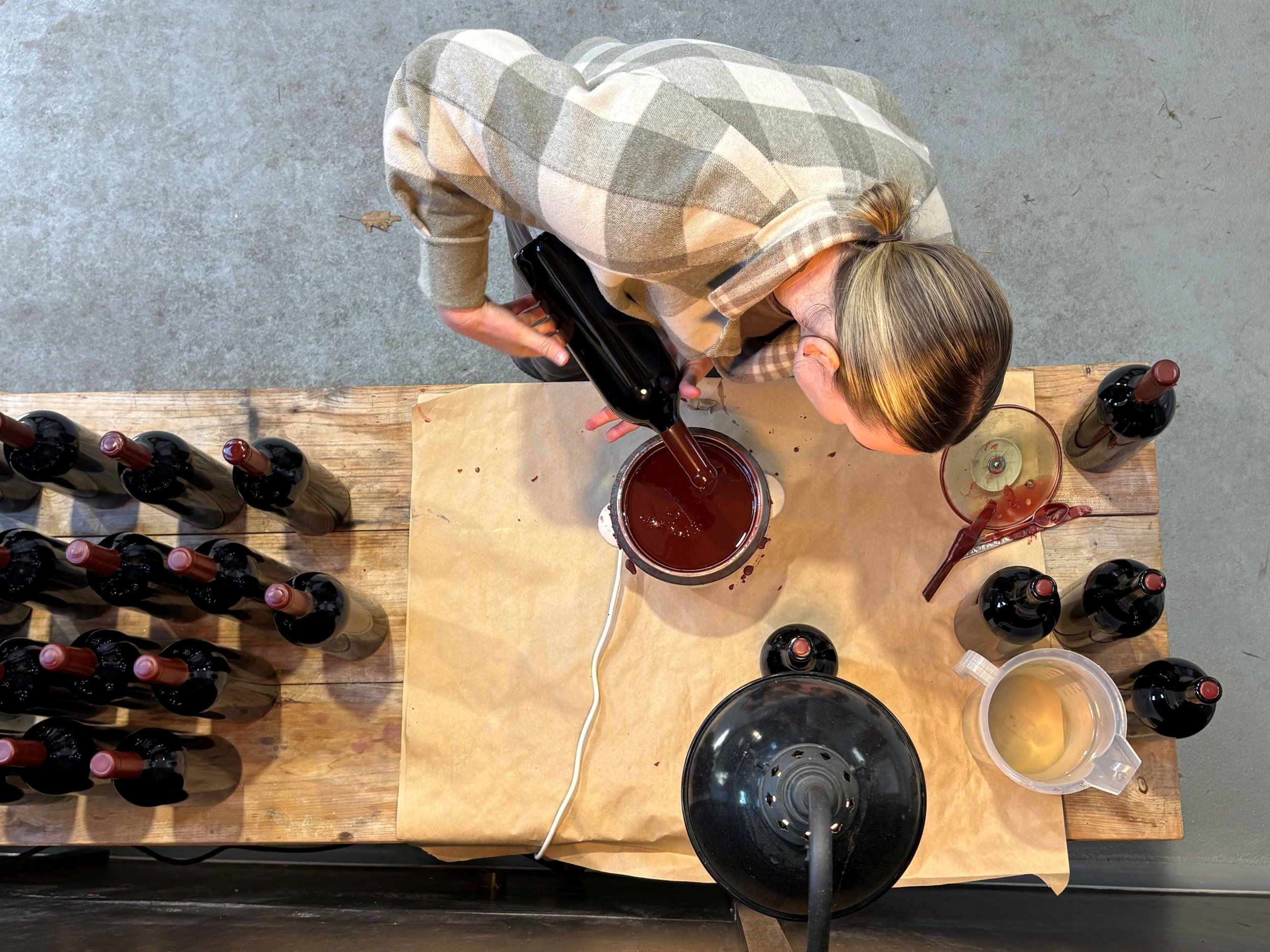
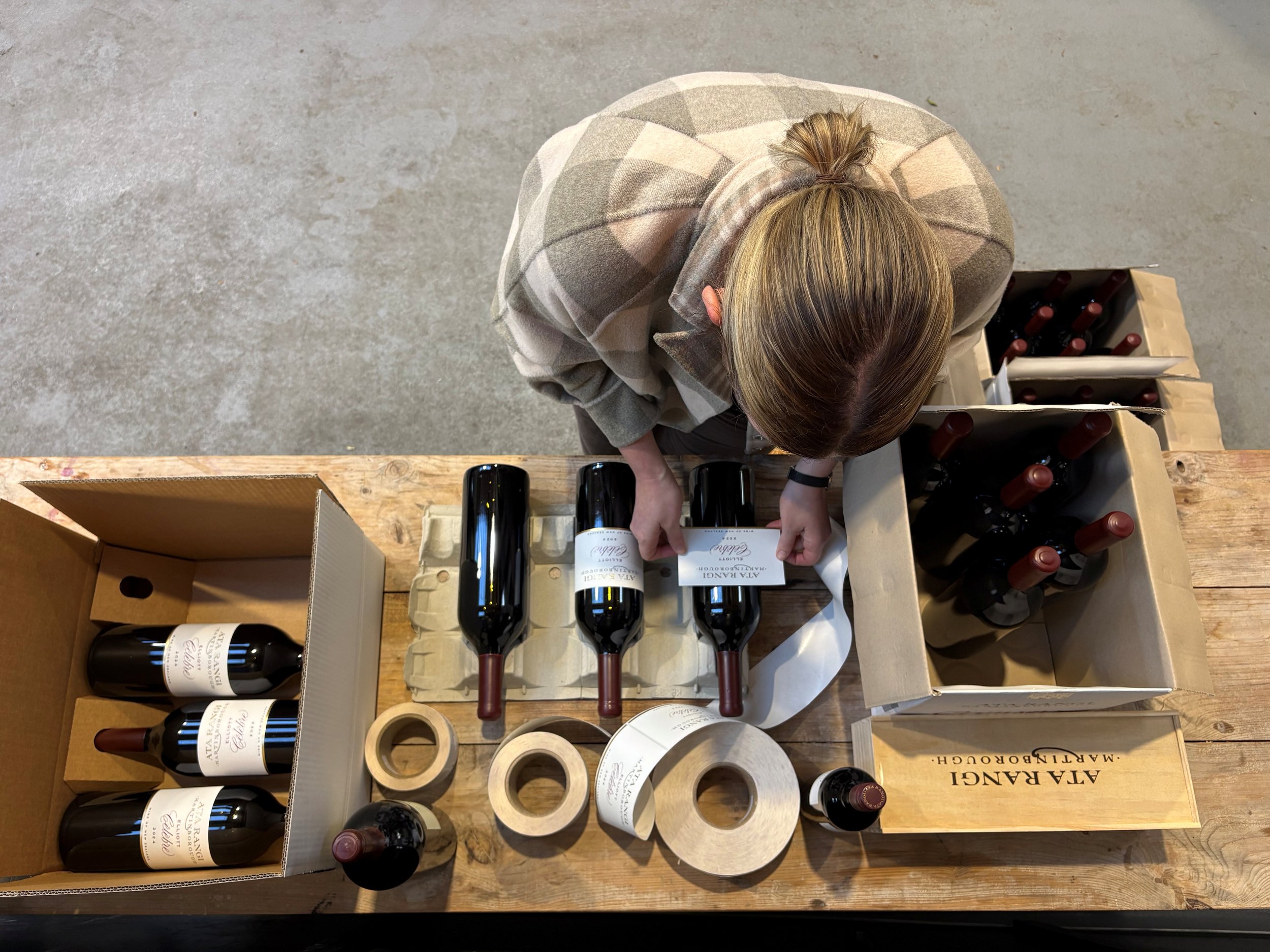
The current release Célèbre magnum getting secured with wax.
The Long-Awaited Reunion: Provenance and Preparation
My Célèbre affair was subsequently interrupted by a twelve-year sojourn in Sydney. It was briefly rekindled in the early 2000s when I returned to New Zealand to work for Fonterra, only to be paused again by another ten years of working in Asia. Since my permanent return in 2015, however, the passion has resumed with a vengeance; I have purchased and cellared every vintage from 2014 onwards.
I conceived the idea of this unique vertical tasting partly to celebrate my personal devotion to the wine, and partly as a tribute to Ata Rangi founder Clive Paton, for whom Célèbre has always held a special place. Over the course of fifteen months, I managed to acquire at auction regular bottles of the 1994, 1996, and 2006 vintages, alongside a magnum of the 1998. Ata Rangi generously supplied a bottle of the 2013, and Clive personally delivered a magnum of the 1995—an unexpectedly magnificent addition to our original lineup.
We were privileged to have Clive and head winemaker Helen Masters as our honoured guests and active participants. During the afternoon, Clive shared an amusing anecdote about how the wine received its name: “I grabbed a French dictionary, scanning the words, and this one stood out—so that became the name of the wine.”
Assessing the storage history and closures of a 30-year span of New Zealand red wine always brings a degree of suspense. All of the wines from 2013 onwards had been perfectly stored in temperature-controlled cellars and were bottled under screw cap. The provenance of the 2006, also under screw cap and purchased at auction, was described as “excellent, stored in a temperature-controlled cellar.” The 1998 magnum, sealed under cork, originated from the auction of MW wine critic Bob Campbell’s personal cellar. Thus far, I had no major concerns about wine quality.
The 1994 and 1996 bottles, however, were both under cork and acquired at auction with provenance described as “good, stored in a dark, cool, passive cellar”—which, in my experience, is often a classic euphemism for “buyer beware.” Upon arrival, the 1998 and 1996 magnums and bottles appeared to be in good physical condition. The capsule of the 1994, by contrast, was heavily oxidised, and the bottle showed noticeable ullage.
General Observations About the Tasting
Despite living in the shadow of Pinot Noir, Célèbre is quintessentially a Martinborough wine and the variations in blend are reflections of “what the vintage gives” rather than from any desire for a standardised wine product. The heavier extractions with more assertive punch downs often associated with “Bordeaux blends” are eschewed in favour of freshness, aromatics, and approachability: nonetheless these are wines with widely recognised - though also underestimated - ageability: something this vertical would powerfully demonstrate.
Within those vintage and associated assemblage variations a consistent style emerged: structure with finesse, ripe but savoury fruit, appealingly floral aromatics with a distinct edge of spice and dried herbs. The experience and expertise of tasting participants including the sommelier team from renowned Wellington Wine Bar, Noble Rot and long-time members of the Magnum Society brought singular affirmation of the quality of the lineup, but no consensus favourites.
I also want to acknowledge with much appreciation the kindness of David and Sonia Wansbrough in holding this event in their home and providing a delicious and judiciously matched lunch to accompany the tasting.
The Whakapapa of a Taonga
Célèbre has always been more than a blend; it’s a thread woven through the history of a region, a winery, and the vision of one man. Revisiting three decades of this wine made it impossible not to return to Clive Paton himself — the farmer‑turned‑vigneron whose instinct, tenacity, and quiet conviction helped shape modern Martinborough. Standing at that roadside stall in 1986, pouring wine for strangers, Clive could never have known how deeply his creation would resonate with people who encountered it. Yet this tasting proved that his early intuition — that Martinborough’s stony soils could yield something profound beyond Pinot Noir — was absolutely right.

Clive with his daughter, Ness.
What emerged across these 13 vintages was not simply evolution, but continuity: a consistent thread of savoury fruit, spice, structure, and unmistakable Martinborough character. In tracing this whakapapa — the lineage of people, place, and practice that has shaped Célèbre — it becomes clear how faithfully the wine reflects Clive’s original ethos of authenticity and site expression, carried forward with equal dedication by Helen Masters and the Ata Rangi team.
Given how little reliable commentary exists for the earlier vintages of Célèbre, I hope this retrospective will serve as a useful resource for collectors, students, and anyone curious about the wine’s long arc of development. More important though, it stands as a tribute both to Clive himself and to the enduring spirit of exploration that has defined Ata Rangi from the very beginning to the present day. The true tribute however is the wine itself and the legacy it bears.
“E kore e ngaro te kākano i ruia mai i Rangiātea”
(The seed sown from the Clear Heavens will never be lost).
~